a beam-splitter rig is a piece of 45-degree glass mounted in front of your camera. your phone sits flat under the glass, screen up, and the glass bounces that screen back at you. you read the words and look straight down the lens at the same time. the camera sees through the glass and never sees the text. that's the whole trick, and it's the reason a phone is still the right tool for this.
the phone doesn't have to be the camera. on a real rig the camera is a separate body behind the glass. the phone's only job is to show the script and follow your read. an iphone is great at that. the screen is bright, it's the device you already own, and with open prompter it reads the markdown file you already wrote. no paste, no import, no subscription for the privilege.
so the rig is the part you shop for. this is what i run, plus a few options across price points if you want something different.
the founder's pick: a rod-mount rig#
i run a SmallRig-style beam-splitter that clamps onto 15mm rods. it's the boring, correct choice. the glass is real 70/30 beam-splitter glass, not acrylic, so the script reads bright and the camera still gets a clean image. it has an adjustable flag up top to kill stray light outdoors. and because it lives on 15mm rods, it shares a baseplate with the camera instead of hanging off a separate stand.
the rod thing matters more than it sounds. when the prompter and the camera are on the same rods, they move together. you reframe, you reposition the whole thing, nothing drifts out of alignment. it's the difference between a rig you trust and a rig you keep re-leveling between takes.
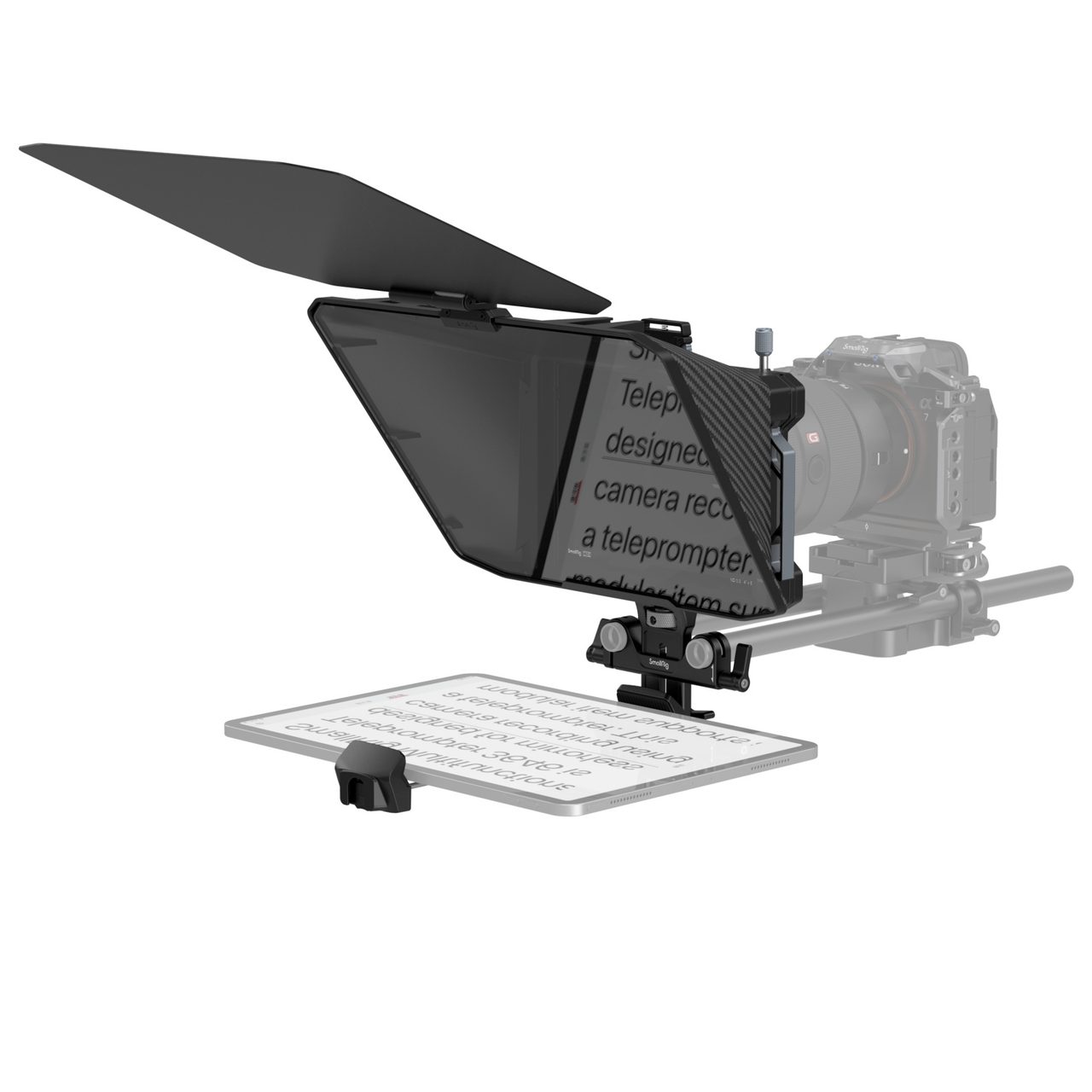
if you want the exact one i'm describing, SmallRig sells a multifunctional teleprompter that's 15mm-rail compatible and does the job. you don't need that specific model. any rod-mount splitter with real 70/30 glass and a phone tray gets you here. but if you're going to spend once, spend on rods.
the rest of the field#
not everyone needs a rod rig on day one. here are three more, cheap to serious, so you can match the spend to what you shoot.
budget, phone-only#
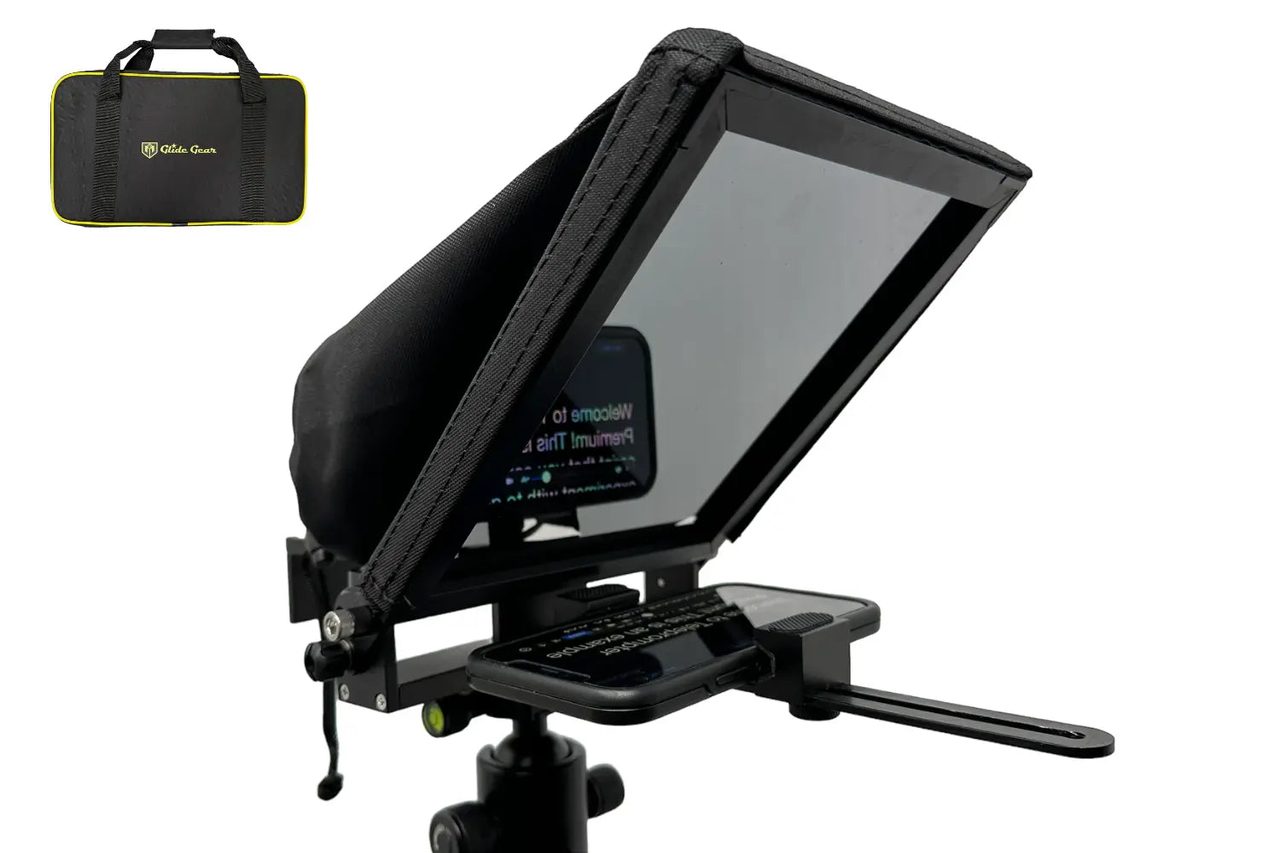
the cheapest honest option is a small folding splitter built for a phone. the Glide Gear TMP 50 is the shape of thing i mean. it collapses into a carry bag, takes a phone up to 6.7 inches, and uses real 70/30 glass instead of the acrylic the no-name kits ship. it runs around $99.
who it's for: a creator who wants eye-line down the lens of their own phone camera, or a webcam, without building a rig. the caveat is the obvious one. it's phone-sized and phone-only. there's no proper mount for a mirrorless body, so if a "real" camera is in your future, this isn't the rig you grow into.
the middle: a 15mm rod rig that won't wreck your budget#
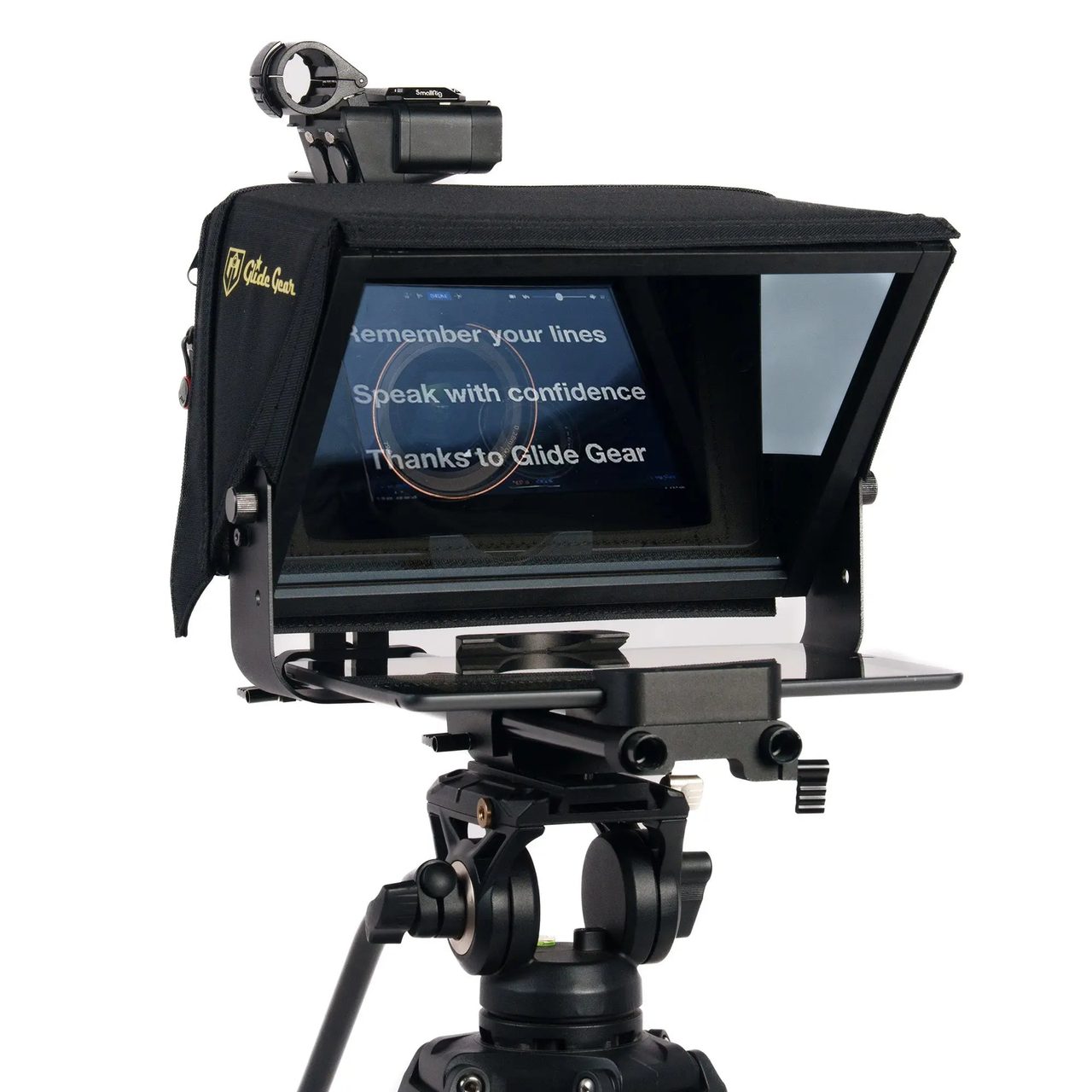
if you want rods without the pro-rig price, the Glide Gear TMP 500 sits on a pair of 15mm rails and runs about $249. it takes a phone or a tablet, mounts to a tripod or a shoulder rig, and gives you the same shared-baseplate alignment the pricier rigs do. the glass is 70/30. the camera platform adjusts vertically so you can line the lens up behind the glass.
who it's for: someone shooting with a mirrorless body who wants a real rod rig and doesn't need a 17-inch reading surface. the caveat: the tray fits most tablets but not the largest iPad Pro, so check your device before you buy. for a phone it's no issue at all.
the serious end: big glass, heavy camera#
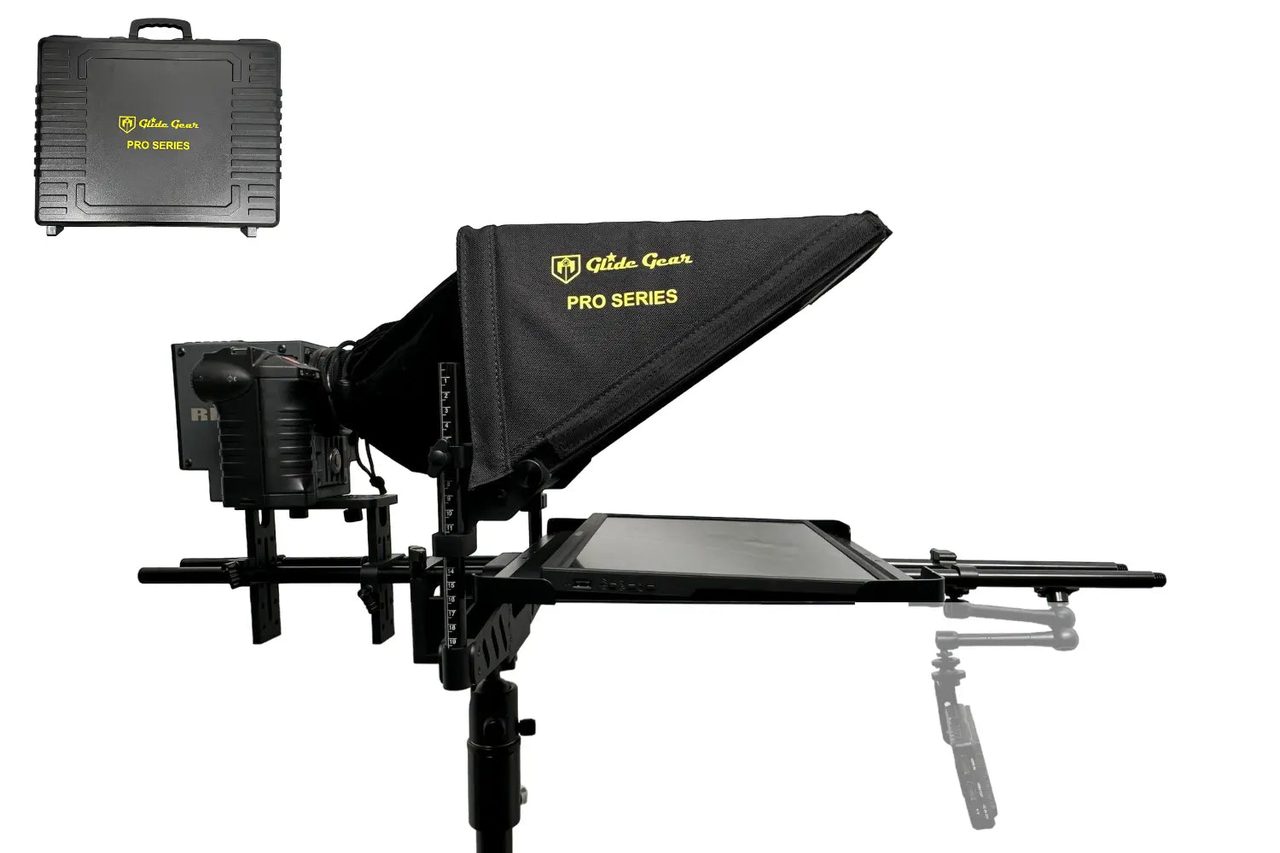
if you're running a heavier camera and want a large reading surface, the Glide Gear TMP 1000 is the pro-tier shape. seventeen inches of 70/30 glass, 15mm rail compatible, a baby pin for C-stand mounting, and it'll carry a camera rig up to about ten pounds. it runs around $499.
who it's for: studio and serious field work where the camera is big, the talent is a few feet back, and you want a script you can read from across the room. the caveat is the obvious trade. it's large, it's heavier, and it's overkill if you're a solo creator shooting at arm's length. if that's you, the rod rig above is plenty.
how to rig your iphone as the source#
the rig is half of it. the phone is the other half, and a few settings make the difference between a clean read and a fight under the glass.
mount it flat, screen up. the phone lies under the glass facing up into the splitter. portrait or landscape depends on your rig's tray. orient the prompter to match.
mirror the text horizontally. the glass reverses your text left-to-right, so you flip it back. open prompter cycles the mirror with one chip: off, horizontal, vertical, both. horizontal is the beam-splitter standard. set it and the reflection reads normally. for the odd periscope or upside-down rig, vertical and both are there. more on the axes in mirror mode explained.
brightness all the way up. the glass eats some of your light on the way to your eyes. crank the phone's screen brightness so the reflection stays readable, especially outdoors under that flag.
go hands-free with a bluetooth remote. your hands belong on the camera, not on a phone buried under glass. pair a remote and bind play, pause, scroll, and jump-to-start-of-take. fluff a line, thumb the button, and the script snaps back to the top without you leaning under the rig.
route a lavalier so voice tracking follows you. this is the one most rigs can't do. open prompter's voice tracking listens on the recording audio path, so it follows whatever mic you feed the phone. plug a lavalier into the phone over USB-C or a 3.5 mm TRRS input, clip it to your collar, and step back to your mark. the script tracks your actual words from across the room, well past where the built-in mic would hear you. it's the trick that makes a rig work at performance distance instead of arm's length. the full walkthrough is in the beam-splitter teleprompter guide.
turn on focus mode while you're at it. it dims the chrome down to the words, so the glass reflects clean text instead of buttons. one eye button brings the controls back.
you don't need to spend to read down the lens#
the rig is real hardware and you do have to buy it. but the software side has been getting nickel-and-dimed for years. mirror mode behind a paywall. your script uploaded to someone's cloud. a monthly fee that scales with how serious you are.
it doesn't have to work that way. a cheap folding splitter and open prompter gets you most of the way: eye-line down the lens, mirrored text, hands-free with a remote, and voice tracking from a wired lav. a rod rig gets you the rest. and the app is free, MIT-licensed, no account, no subscription. the glass is the only thing you pay for.
pick the rig that matches what you shoot. point the phone at the folder your scripts already live in. read down the lens.